
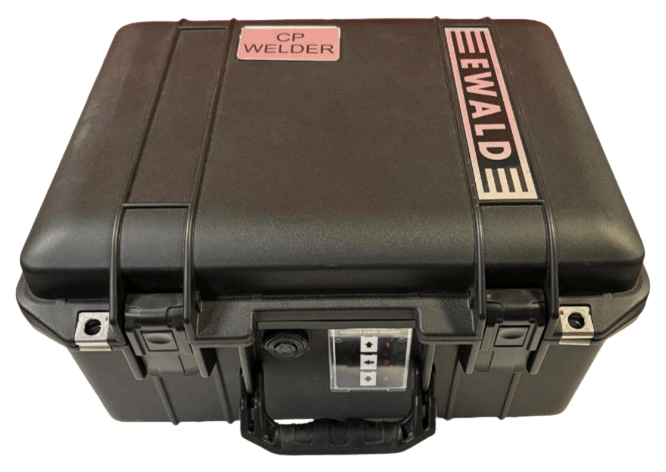
Cathodic Protection Welders
EWALD Cathodic Welders are used to weld leads to cathode wires and screens around bridges, boat ramps, dock piers and other industrial uses.
- Watertight Heavy Duty Plastic Case
- Carry Handle and Lockable
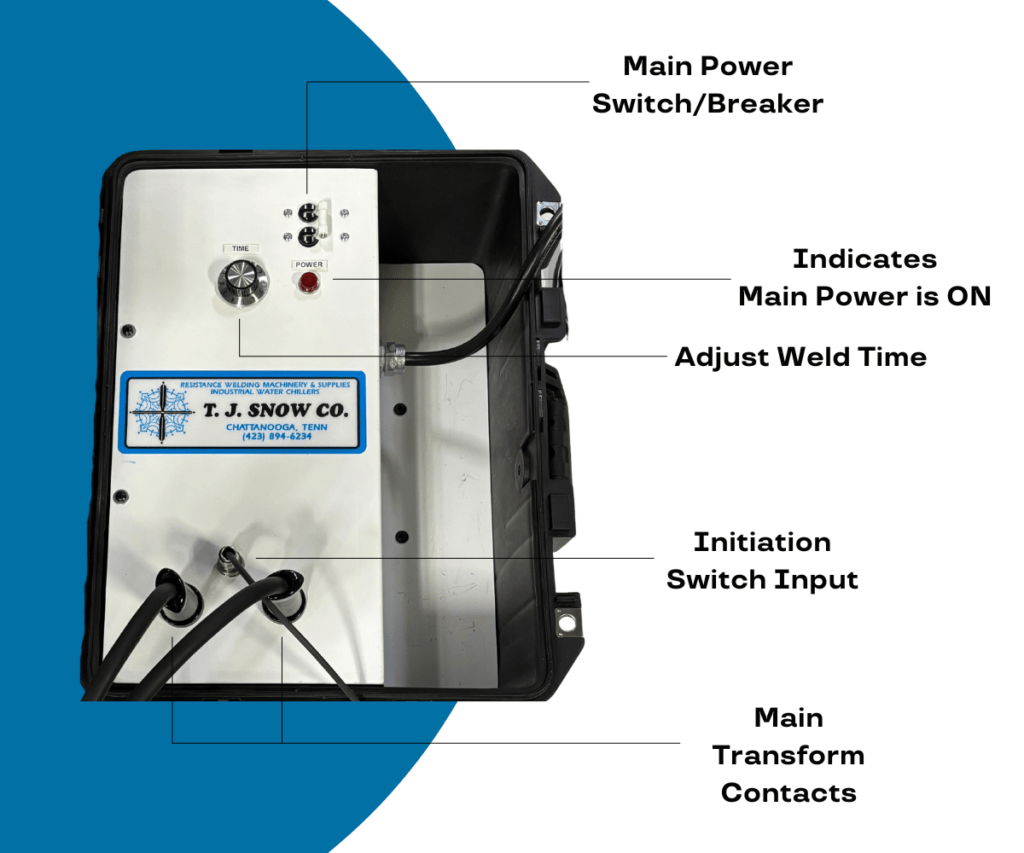
- 110 VAC Operation with your choice of plug ends
- 3/4 kVA welding transformer
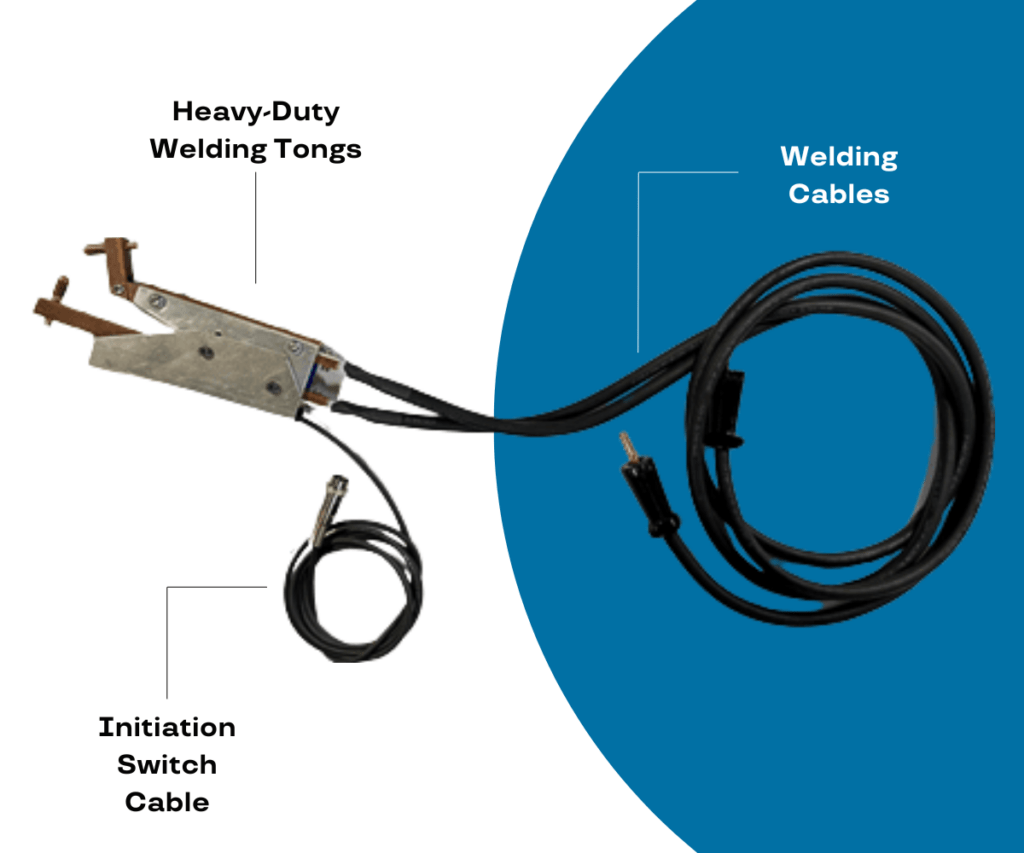
- Heavy-duty welding handpiece with 5' cables
- Replaceable electrodes
What is CP Welding?
While the concept of cathodic protection was first recognized in the 1800s, in the early 1970s engineers developed electromechanical corrosion mitigation techniques that use cathodic protection (CP) to stop or slow corrosion of steel reinforcements inside of concrete bridges and in bridge decking. It works by applying a low DC current (Impressed Current Cathodic Protection – ICCP) or using sacrificial anodes (Sacrificial Anode Cathodic Protection – SCP) and the resulting electrical current protects the metal from rust and corrosion.
EWALD CP Protection welders, sometimes called “Resistant Welders” in older specification and technical papers, are used with rolls of mesh anode material to electrically bond adjacent rolls of mesh material by using metal strips. Often a titanium strip is welded to titanium mesh anode at 3 inch intervals to provide the current carrying path. Titanium Mesh ICCP usually uses the EWALD CP Welder for joining. The resulting assembly is encapsulated into concrete.
The Ewald Capacitive Protection welder requires a 120v power source, and is usually powered by a portable generator at the bridge jobsite. Newer models featuring a plastic suitcase design, which is preferred over the older generation fully metal enclosure.